

 Feed back
 Privacy Policy
AquaStell
It's 7:42 AM on a sweltering June morning in 2025. You're crammed into a Bangalore metro train, sweat soaking through your shirt, trying not to breathe in the diesel fumes that seep in every time the doors open. Outside, construction drones buzz overhead, laying fiber cables while potholes swallow rickshaws whole. Your phone buzzes—an alert from the Bengaluru Youth Urban Forum: *"Your feedback helped reroute Bus Line 8B. First trial run starts today."* You blink. Someone listened?
This isn't science fiction. Across India—from Indore to Imphal, from Guwahati to Gwalior—young people are stepping into spaces once reserved for aging bureaucrats and career politicians. They're not just protesting. They're drafting policies. Sitting in municipal chambers. Redesigning public transport routes. And they're doing it through something quietly revolutionary: youth policy councils.

Let's go back to 2021. A group of college students in Bhopal launched a petition demanding safer cycling lanes after two fatal accidents near their campus. The municipality thanked them, filed the report—and did nothing. Frustrated, they didn't give up. Instead, they asked a different question: *What if we weren't begging for attention—but part of the decision-making process itself?*
That question birthed one of India's first official youth policy councils—a body of 25 young residents aged 16–25, selected via open application and civic merit, given monthly access to the city's urban development committee. Within a year, they co-designed a pilot bike-sharing program integrated with public transit. By 2025, Bhopal had reduced last-mile commute times by 28%—and became a blueprint for others.
Take Chennai's story. In early 2023, a viral video showed a wheelchair-bound student stranded outside a newly built metro station—because the ramp was blocked by parked scooters. The clip sparked outrage, but also inspiration. A team of engineering and social work students from Anna University formed the *Chennai Youth Mobility Collective*, applying to join the city's nascent youth policy council.
Their proposal? A "Universal Access Audit" of all public transit points. Using mobile apps and crowdsourced data, they mapped accessibility gaps across 47 stations. Then came the bold move: they presented findings directly to the Chennai Corporation Commissioner—with cost-effective retrofitting plans.
Result? By mid-2024, 32 stations were upgraded with tactile paths, audio signals, and anti-obstruction barriers. More importantly, the city adopted their audit framework as mandatory for all future infrastructure projects.
"You don't need decades of experience to spot what's broken," says Riya Malhotra, 22, who led the project. "Sometimes you just need to live in the city without privilege."
According to a 2025 NITI Aayog report tracking 22 participating cities:
Even more striking: when youth councils focus on sustainability, outcomes accelerate. In Indore—the country's cleanest city since 2017—its youth panel pushed for AI-powered waste segregation bots in residential zones. After a successful six-month trial, the tech was scaled citywide, cutting landfill use by 31% (Source: NITI Aayog Urban Governance Report 2025).
The average age of a municipal councillor in India is 54. The median age of the population? 28. There's a representation gap wider than the Yamuna in summer.
Traditional democracy moves slowly. Elections happen every five years. Issues evolve monthly. Climate shocks hit weekly. And let's be honest—most young Indians don't see themselves reflected in khaki-uniformed officials or marble-halled town halls.
That's where civic participation needs reinvention. In 2025, forward-thinking cities are treating youth not as beneficiaries, but as co-creators. This shift isn't cosmetic. It's structural. For instance:
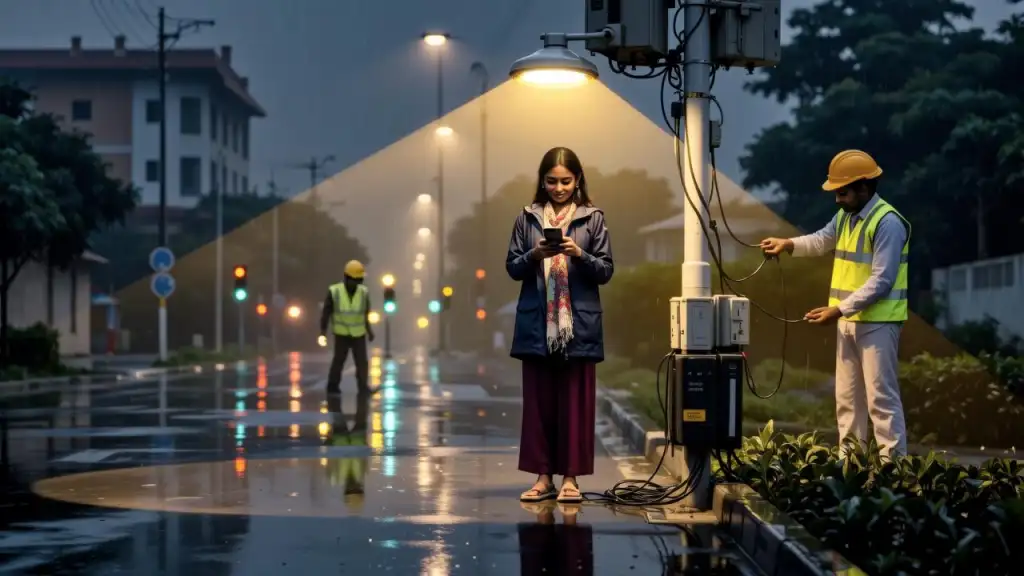
Youth policy councils act as real-time sensors for urban pain points. A student in Guwahati flags poor street lighting via the council's app → engineers respond in 72 hours → community safety improves → trust grows.
Moreover, participation breeds ownership. A 2024 study by the Centre for Policy Research found that young people involved in councils were 3.2x more likely to volunteer locally, 2.7x more likely to report corruption, and far more engaged in neighborhood problem-solving—even after their term ended (Source: CPR Civic Engagement Index 2024).
Project Udaan (Lucknow):
After repeated flooding paralyzed neighborhoods, the youth council analyzed drainage maps and identified clogged stormwater drains near schools. They partnered with drone startups to map blockages and used gamification to mobilize clean-up drives. Result? 89% reduction in monsoon flooding in targeted zones.
SafeStreets App (Mumbai):
Developed by a 24-member team from the Mumbai Youth Safety Council, this GPS-based platform allows women and LGBTQ+ users to report unsafe zones in real time. Data is shared automatically with police patrols and city planners. Since launch in late 2023, harassment reports dropped by 41% in pilot wards.
How can I join or start a youth policy council in my city?
Reach out to your municipal corporation's youth wing or NGO partners like Yuva Unstoppable or CRY India. Many cities now accept applications annually. If none exist, gather 10 peers, draft a charter, and petition your mayor.
Do these councils actually have real power?
Most have advisory status with guaranteed hearing rights. In progressive cities like Pune and Kochi, council recommendations bypass bureaucracy and go straight to executive committees. Budget allocations are increasing: some now manage up to ₹50 lakh ($60,000) per year.
What's stopping more cities from adopting this model?
Three barriers: resistance from entrenched officials, lack of sustained funding, and perception that youth lack expertise. But as success stories pile up—pressure is mounting. The 75th Anniversary of Independence spurred several states to pledge youth inclusion targets by 2026.
【Disclaimer】The content regarding Youth Councils Driving Policy Change in Indian Cities is provided for informational purposes only and does not constitute professional advice. Readers should consult qualified professionals before making decisions based on this information. The author and publisher disclaim liability for any actions taken based on this content.
Arjun Mehta
|
2025.11.13
