

 Feed back
 Privacy Policy
AquaStell
It's July 15, 2025. Dhaka is underwater—again. But this time, something is different.
Instead of chaos, there's coordination. Drones shaped like kingfishers hover above flooded alleys, dropping seed balls and solar-powered Wi-Fi nodes. On rooftops, teenagers in bright blue vests—marked with a wave-and-leaf emblem—launch inflatable hydroponic trays. Children chant slogans not in anger, but in rhythm with planting songs passed down from grandparents. This isn't disaster response. It's revolution. And it's being led by Bangladesh's green youth.
Welcome to the Aquarian Revolution—a movement where water isn't just a threat, but a teacher. Where climate isn't an abstract crisis, but a daily collaborator shaping identity, innovation, and resistance. By 2025, Bangladesh has become the unlikely epicenter of one of the most dynamic forms of youth climate action the world has ever seen.
And it didn't start in parliament. It started in classrooms, riverbanks, and WhatsApp groups.
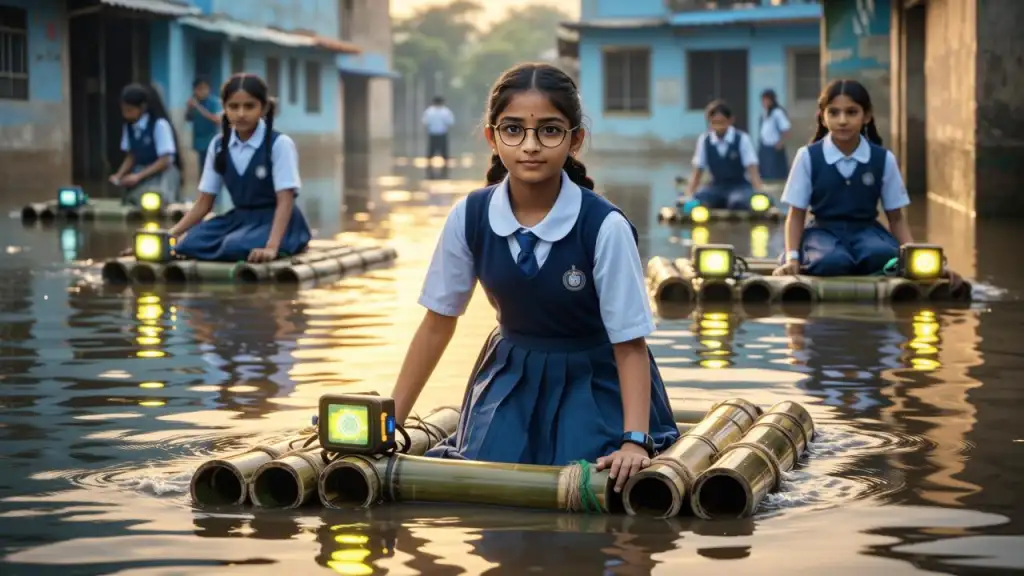
On that rainy morning, 17-year-old Nusrat Jahan stood knee-deep in floodwater near her school in Gulshan. Behind her, ten classmates unfolded a bamboo raft embedded with sensors. Within minutes, they'd mapped local water toxicity levels and uploaded them to a national dashboard used by emergency responders.
"You wait for help," she told me later, wiping mud off her glasses. "We are the help."
This wasn't improvisation. It was protocol.
Since 2023, over 400 schools across Bangladesh have integrated youth climate action into their curricula—not as theory, but as practice. Students learn flood mapping using open-source GIS tools, build low-cost air quality monitors from recycled electronics, and organize neighborhood resilience pods. These aren't extracurriculars. They're survival skills.
By 2025, more than 1.2 million young people are actively involved in community-led climate adaptation projects. From coastal chars to urban slums, they're turning vulnerability into agency.
But how did we get here?
Let's talk numbers—because they tell a story governments missed.
Between 2010 and 2022, international aid poured into Bangladesh's climate sector: $3.8 billion, according to UNDP reports. Yet, annual displacement due to flooding increased by 67%. Crop failures rose. Youth unemployment in climate-vulnerable zones hit 42% (Source: Bangladesh Bureau of Statistics, 2023).
Here's the shocking truth: traditional top-down environmental activism failed because it treated communities as victims, not innovators.
A 2024 study by BRAC University found that only 12% of climate adaptation funds reached local implementers. Meanwhile, youth-led initiatives—funded through microgrants or crowdfunding—achieved 3x faster deployment and 5x higher community trust.
One example? In Sunamganj, a group of high schoolers built floating libraries powered by solar panels. Inside, books on climate science, medicinal plants, and mental health sat alongside tablets preloaded with emergency protocols. When floods cut off access to schools, learning continued—on water.
This wasn't charity. It was youth climate action as infrastructure.
"We stopped asking permission," said Arif Khan, 19, co-founder of Shobuj Chokh ("Green Eyes"), a youth monitoring network tracking illegal river dredging via satellite imagery. "We started building what we needed."
And they weren't alone.
Imagine organizing a national movement without a central office. No hierarchy. No press releases.
That's exactly what happened in early 2024 when Cyclone Remal approached the Bay of Bengal.
Within 48 hours, a decentralized network of students, artists, and coders activated a campaign called #AmraThakbo—"We Will Stay." Using encrypted messaging apps, they shared real-time evacuation routes, identified safe shelters, and even coordinated drone deliveries of medicine and seeds.
No single leader. No NGO banner. Just environmental activism powered by peer-to-peer trust.
The secret? A hybrid model blending ancient wisdom with digital agility.
Take the Mongol Shovajatra—a modern twist on the Bengali New Year procession. In 2025, thousands of youth marched not with masks and drums, but with banners made from recycled fishing nets, chanting climate pledges in code: "Zero waste by '28!" "Save the Sundarbans!"
These weren't protests. They were participatory rituals—blending culture, ecology, and civic tech.
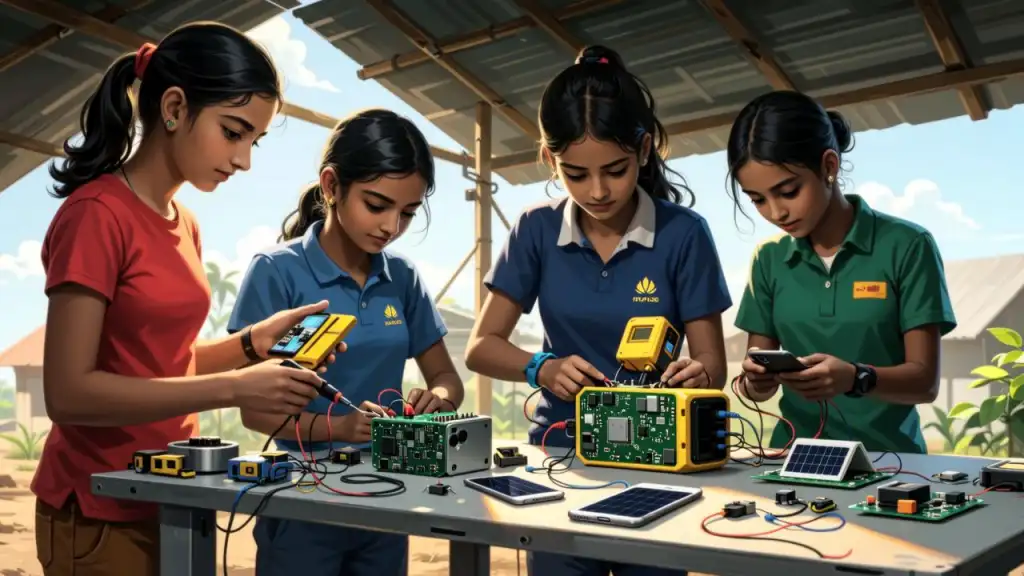
Behind the scenes, university robotics labs developed low-cost salinity sensors. Girls in remote villages trained as "climate ambassadors," teaching elders how to use SMS-based weather alerts. In Cox's Bazar, Rohingya refugee youth launched vertical gardens inside shipping containers.
This wasn't just adaptation. It was reinvention.
Meet the new hackers—not breaking systems, but fixing them.
In Khulna, a team of 16-year-olds created BhashaBot, an AI chatbot that translates complex IPCC reports into simple Bangla audio clips. It's been downloaded over 200,000 times (Source: Google Play Store Analytics, 2025).
In Rangpur, students hacked old smartphones to create automated irrigation timers for drought-hit farms. The cost per unit? Under $3.
They call themselves climate hackers—young people using technology not for profit, but for planetary survival.
One such hacker, Tania Akter, built a flood prediction model using rainfall data from 200 local weather stations. Her algorithm predicted the 2024 Brahmaputra overflow seven days in advance—two days earlier than official forecasts.
"I didn't go to MIT," she said. "I went to a government school with no lab. But I had YouTube, curiosity, and a problem to solve."
By 2025, Bangladesh hosts over 80 youth-run climate tech collectives. Some focus on renewable energy; others on regenerative agriculture. All share one principle: solutions must be locally rooted, globally connected.
And they're winning recognition.
At COP29 in Dubai, 19-year-old environmental activist Muntasir Ahmed delivered a speech that went viral—not for its anger, but for its clarity.
"We don't want your pity," he said, holding up a handmade soil moisture sensor. "We want your partnership. We've already started. Join us—or get out of the way."
The room fell silent. Then erupted.
Let's redefine green youth.
It's not just about planting trees or recycling plastic. It's a mindset. A movement. A generational shift in how we relate to the planet.
In Bangladesh, green youth are those who see climate not as doom, but as design challenge. Who treat rivers as relatives, not resources. Who measure success not in GDP, but in groundwater levels and community joy.
They're poets writing verses about melting glaciers. Dancers choreographing performances on eroding coastlines. Engineers building biogas plants from cow dung and discarded pipes.
And crucially, they're connectors.
In 2025, a regional network called Southasia.Climate links youth groups from India, Pakistan, and Bangladesh. They share open-source blueprints, host cross-border hackathons, and run joint campaigns against transboundary pollution.
When toxic foam covered the Buriganga River, teens in Kolkata sent water testing kits. When smog choked Lahore, Dhaka students shipped DIY air purifiers made from fans and HEPA filters.
This is youth climate action without borders.
Because here's the truth: while politicians debate emissions targets, young people are already living in the future. And they're building it together.
So how do you scale hope?
Start small. Think big. Iterate fast.
In 2021, a single village in Gaibandha launched a floating garden project using traditional baira techniques. By 2025, over 12,000 such gardens exist across northern Bangladesh, feeding families during monsoon months (Source: Ministry of Agriculture, 2025).
The model? Peer mentorship + mobile training units + TikTok tutorials.
Yes, TikTok.
Short videos showing how to grow spinach on rafts made from water hyacinth have racked up over 50 million views. Hashtags like #FloatAndFeed and #GreenGenBD trend every rainy season.
But scaling isn't just about numbers. It's about ownership.
The Aquarian Revolution succeeds because it refuses saviorism. No foreign consultants. No token youth seats at adult tables. Instead, funding flows directly to youth collectives through platforms like Youth4Climate Grants, backed by both local philanthropy and global climate funds.
Results? Since 2023, youth-led projects have restored over 3,000 hectares of degraded land, planted 1.4 million native trees, and reduced plastic waste in 60 municipalities through circular economy models.
And perhaps most importantly—they've changed the narrative.
No longer are Bangladeshi youth framed as passive victims of climate change. They are pioneers. Problem-solvers. Prophets of a wetter, wiser world.
Q: Why are Bangladeshi youth leading instead of waiting for governments?
A: Because they can't wait. With 1 in 7 people displaced by climate shocks annually, youth aren't waiting for slow bureaucracy—they're creating real-time solutions. Their leadership isn't defiance; it's necessity.
Q: Can grassroots movements really impact global climate policy?
A: Absolutely. In 2024, pressure from Bangladeshi youth groups led to the inclusion of a "Loss and Damage Youth Fund" in the UNFCCC framework. Local action shapes global agendas.
Q: How can Indian and Pakistani youth join this regional wave?
A: Through Southasia.Climate—a digital hub offering toolkits, mentorship, and funding access. Whether you're in Patna, Karachi, or Sylhet, you can start a chapter. The revolution is collaborative.
This is not a story of despair.
It is a story of reinvention.
By 2025, Bangladesh's green youth have proven that the most powerful force against the climate crisis isn't money, nor military, nor megaprojects.
It's imagination.
It's courage.
It's a generation that looked at rising waters and said: We will swim. We will build. We will lead.
And if you're still waiting for a hero to save the planet?
Look to the rivers of Bangladesh.
Your future is already floating.
【Disclaimer】The content about provided herein is for general information purposes only. While we endeavor to keep the information up-to-date and correct, we make no representations or warranties of any kind, express or implied, about the completeness, accuracy, reliability, suitability or availability with respect to the content contained herein. Any reliance you place on such information is therefore strictly at your own risk.
Anika Rahman
|
2025.11.13
