

 Feed back
 Privacy Policy
AquaStell
On a humid April night in 2025, thousands gathered near the Parliament in Islamabad—not with stones, not with rage, but with lanterns shaped like open books. As drones lit up the sky forming constellations of Urdu couplets about justice and clean rivers, one phrase pulsed across LED wristbands worn by attendees: "Utopia is not tomorrow. It is ours to build." This wasn't escapism. It was the new front line of resistance.
Welcome to the age of utopian activism—a rising wave across Pakistan where young people aren't just protesting broken systems, but actively designing alternatives rooted in hopeful futures. At its heart lies a radical idea: that dreaming of perfection isn't naive; it's the only way to escape despair.
For decades, political dissent in South Asia has been reactive—responding to corruption, inequality, or environmental collapse. But around 2023, fueled by digital connectivity and climate urgency, a new activist emerged. They began asking: What would true utopia look like—and how do we start building today?
This isn't theory. Across Lahore campuses, students draft alternative constitutions, launch eco-villages, and simulate post-capitalist economies—all under banners reading "We Want More Than Survival." They call it utopia—not as fantasy, but framework.
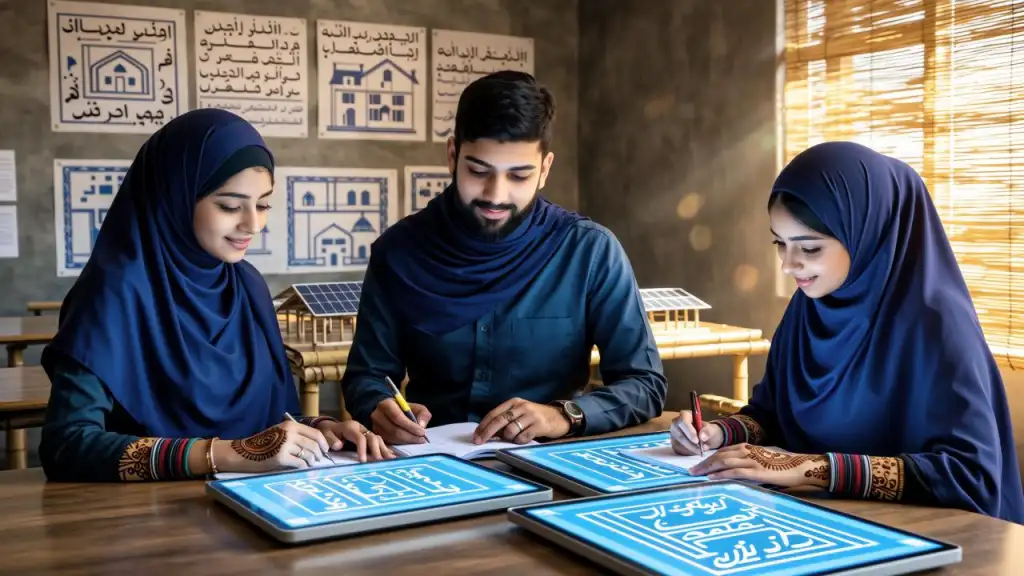
When we say utopia, we don't mean flawless paradise. The current resurgence among Pakistan's youth is grounded and participatory. Take the Lahore Utopia Lab, founded in 2023 by NCA students. They built a temporary city with solar-powered classrooms, rotating childcare, and bi-weekly elected councils—lasting six months as a living prototype.
This shift from critique to creation defines modern utopian activism. During 2024 fuel protests, Futures First PK transformed rallies into immersive experiences—handing out seed packets labeled "Your Future Subsidy" with VR simulations of solar-powered 2030homes.
Data confirms this works. According to South Asia Youth Futures Initiative (SAYFI):
Dr. Nida Khan (LUMS sociologist) explains: "When survival feels uncertain, the mind reaches for coherence. Utopia offers narrative control."
March 2024: Thousands marched toward D-Chowk with instruments, not anger. Organizers paused to distribute tablets with the FutureMap app, asking: Redesign one policy to protect Pakistan's future? 12,000 responses poured in—from river rights to "five trees per child."
Six months later, Punjab's Environment Ministry adopted a modified "Five Trees" initiative. This marked when idealistic change moved from street to statute.
The answer lies in treating hopeful futures as design problems. In 2025, youth-run National Institute of Urban Futures released Building Utopia: Ten Prototypes, including:
Time banks replacing cashSchool councils with budget veto power
One bold proposal: rewriting Article 9 to include a "Right to a Liveable Future." Drafted by teens from Gilgit to Karachi, it sparked national debate about intergenerational justice.
At Habib University, students launched "Zaynabad"—a semester-long simulation of a carbon-neutral, gender-equitable city using blockchain tokens and rotating leadership. By 2025, over 30 such experiments ran across South Asia.
Prof. Aliya Rahman advised: "They're stress tests for democracy. You learn faster when failure costs little."
At Forman Christian College, the Utopia Incubator runs "Policy Fiction Writing"—where speculative stories become legislative drafts. One imagined AI auditors monitoring parliamentary votes; two were adapted into Senate white papers.
Dr. Omar Siddiqui notes: "The line between fiction and policy is thinner than we think. Sometimes, you need to write the world before you can fight for it."
Q: Isn't utopian thinking unrealistic during crises like inflation?
A: Precisely because crises are real, imagination becomes essential. Utopian activism responds with coherent alternatives.
Q: How do movements stay safe under pressure?
A: Through decentralization, art-based messaging, and encrypted tools—avoiding direct confrontation while maintaining momentum.
Q: What makes Pakistani youth different?
A: Digital tools, cross-border learning, and a unique blend of spiritual heritage with scientific curiosity—framing justice morally and ecologically.
【Disclaimer】The content about The Rise of Utopian Thinking in Pakistan's Youth-Led Movements is for reference only and does not constitute professional advice. Readers should make decisions based on their circumstances and consult qualified professionals when needed. The author and publisher assume no responsibility for actions taken based on this content.
Zainab Raza
|
2025.11.13
