

 Feed back
 Privacy Policy
AquaStell
It was 3:17 p.m. on a humid April afternoon in 2025 when 22-year-old Anika walked into *Mind Brew*, her hoodie pulled low, eyes red-rimmed. She hadn't slept in two nights. Her grades were slipping. Her parents thought she was "just stressed." But as she sat down at the corner table, a volunteer named Rafa gently handed her a card that read: *You don't have to talk. But if you want to, we're here.* No forms. No fees. Just tea, soft lighting, and someone who listened—really listened.
This wasn't a clinic. It wasn't even technically medical. It was a *mental wellness café*—one of over a dozen quietly transforming Dhaka's urban landscape, run not by doctors, but by young visionaries under 30. And in a region where mental health stigma still silences millions, these spaces are doing something radical: making wellness accessible, affordable, and human.
By 2025, Bangladesh has seen a 68% rise in youth reporting anxiety and depression, according to BRAC University's Public Health Institute. Yet fewer than 10% access formal care. In India (IN), Pakistan (PK), and Bangladesh (BD) alike, therapy remains expensive, culturally stigmatized, or simply unavailable outside major cities. But what if healing didn't require a white coat? What if it began with a cup of coffee and a promise of safety?
That's exactly what's happening in neighborhoods like Dhanmondi, Mirpur, and Gulshan—where old bookshops and shuttered boutiques are being reborn as havens of peer support, dialogue, and emotional recovery. These aren't just cafes serving matcha lattes. They're grassroots movements disguised as cozy lounges, redefining what wellness means for a generation tired of suffering in silence.
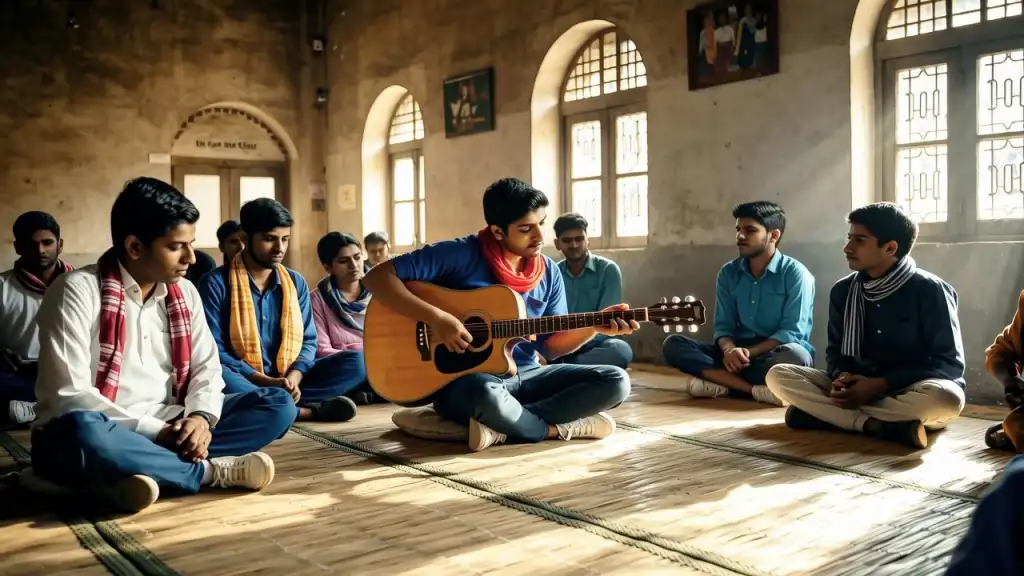
Let's be clear: no one is claiming that mental wellness cafés can replace clinical treatment. For severe conditions like bipolar disorder or schizophrenia, professional intervention remains non-negotiable. But for the vast middle ground—the chronic stress, the loneliness, the burnout, the quiet despair that precedes crisis—these spaces are filling a critical gap.
Take *Sukher Kotha* ("Words of Peace") in Old Dhaka. Founded in 2023 by 26-year-old psychology graduate Farhan Ahmed, it started as a pop-up in a community center. He noticed something troubling during his internship at a public hospital: patients weren't avoiding care because they didn't believe in it—they were afraid. Afraid of judgment. Afraid their families would disown them. Afraid the therapist would label them "crazy."
So he tried something different.
Every Saturday, Farhan set up folding chairs, brewed chai, and invited people to come—not for diagnosis, but for conversation. He trained volunteers in active listening and trauma-informed communication. No one wore lab coats. No clipboards. Just name tags and empathy.
Within six months, *Sukher Kotha* had a waiting list. By 2025, it moved into a permanent space funded by crowdfunding and local business sponsorships. Today, it hosts themed evenings: "Anxiety & Art," "Grief & Guitar," "Queer & Questioning." It's not therapy. But thousands say it's helped more than any session ever did.
"I came because I couldn't sleep," said Sumaiya, a 19-year-old nursing student, during a visit in February 2025. "I didn't want pills. I just wanted to feel... normal. Here, I'm not 'the depressed girl.' I'm Sumaiya, who likes painting sunsets and hates cilantro. That matters."
These mental wellness cafés aren't curing mental illness. They're restoring identity.
Here's an uncomfortable truth: South Asia's mental healthcare system is broken—not because of lack of talent, but because of design.
In Bangladesh, there are approximately 0.3 psychiatrists per 100,000 people (WHO, 2024). In rural areas, that number drops to near zero. In India, despite having over 10,000 psychiatrists, most are concentrated in metro cities like Delhi and Mumbai. In Pakistan, cultural taboos mean many view mental distress as spiritual weakness or family shame.
Even when services exist, cost is prohibitive. A single therapy session in Dhaka averages BDT 2,500 (~$25)—more than half the monthly income of nearly 40% of urban youth (BIDS, 2024).
But beyond logistics lies a deeper issue: trust.
"You go to a doctor, you get a label," said Nusrat Jahan, a 28-year-old teacher and regular at *Mind Brew*. "Depression. Generalized Anxiety. Then you get a prescription. And you leave feeling like a case file, not a person."
This is where mental wellness cafés diverge. They operate on a simple philosophy: healing begins not with treatment, but with belonging.
Unlike clinics, they don't diagnose. They don't medicate. Instead, they create safe spaces—physically and emotionally—where vulnerability isn't punished. Where silence is respected. Where laughter isn't forced, but welcome.
And crucially, they're led by peers.
Many founders are survivors themselves. Rafa, the volunteer at *Mind Brew*, lost her brother to suicide in 2022. Farhan from *Sukher Kotha* struggled with OCD throughout university. Their credibility doesn't come from degrees alone—it comes from lived experience.
"You don't need a PhD to know how to listen," Rafa told me. "But you do need courage to sit with someone in their pain without trying to fix it."
That shift—from fixing to witnessing—is at the heart of the movement.
Creating a safe space isn't about plush sofas or calming music—though both help. It's about intentionality.
At *Shanti Point* in Uttara, founder Mina Rahman (no relation to the author) developed a five-part framework now being studied by Dhaka University's Department of Social Innovation:
1. Threshold Safety: No entry requirements. No ID questions. You walk in, you belong.
2. Emotional Architecture: Lighting is warm. Seating avoids hierarchies (no front desk dominance). Soundproofing ensures privacy.
3. Peer Training: All staff undergo 40 hours of training in empathetic listening, boundary-setting, and crisis de-escalation.
4. Rituals of Welcome: Each guest receives a small token—a painted stone, a pressed flower—symbolizing acceptance.
5. Exit Grace: No pressure to return. No guilt. Just a quiet "We're glad you came."
"It sounds simple," Mina said. "But every detail says: *You are not a problem to solve. You are a person to honor.*"
These principles are spreading fast.
In Lahore (PK), *Zindagi Café* runs weekly poetry slams for trauma expression. In Chennai (IN), *The Listening Room* partners with colleges to host mobile wellness pop-ups during exam season. All inspired, directly or indirectly, by Dhaka's pioneers.
What unites them is a rejection of top-down care models. This isn't medicine trickling down from experts. It's healing bubbling up from communities.
And it's working.
A 2024 pilot study by the South Asian Mental Health Alliance found that participants who visited mental wellness cafés twice a month for three months reported:
- 52% reduction in perceived isolation
- 41% improvement in sleep quality
- 37% increase in help-seeking behavior (i.e., they were *more* likely to pursue therapy later)
"In other words," the report concluded, "peer-led safe spaces don't replace clinical care—they prepare people for it."
Think of traditional mental healthcare as a pyramid: doctors at the top, patients at the base.
Now imagine a circle.
That's peer support.
It's not new—Alcoholics Anonymous pioneered it decades ago—but its application in mainstream wellness culture is revolutionary. Especially in contexts where authority figures are distrusted.
In 2025, Dhaka's mental wellness cafés are leveraging peer networks like never before. At *Nurture Nest*, volunteers use a "buddy board" where guests can request companionship for walks, meals, or just sitting together in silence.
No advice. No preaching. Just presence.
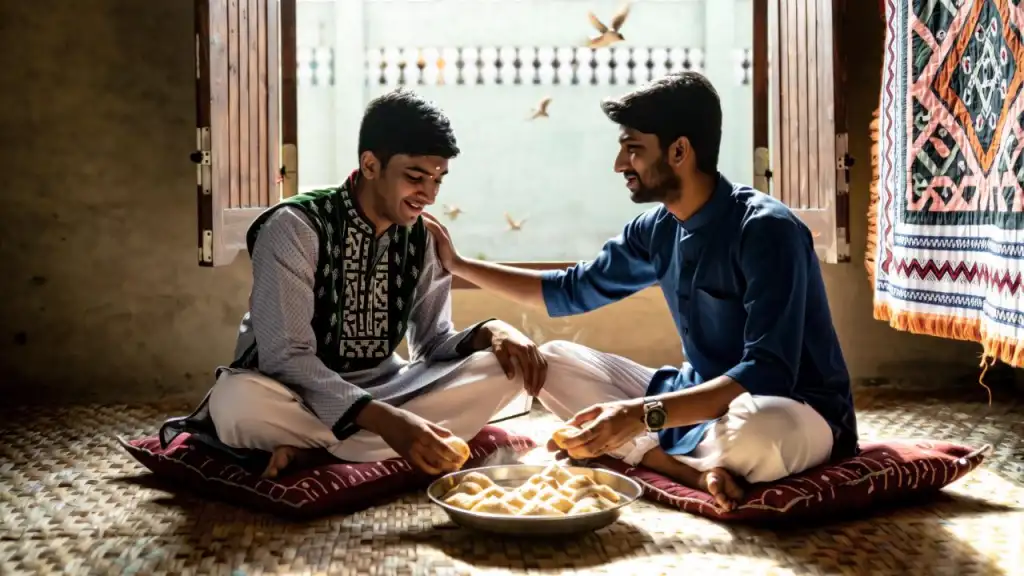
One young man, Reza, wrote on the board: *I haven't spoken to anyone in 11 days.* Within minutes, two volunteers sat with him. They didn't talk much. They ate samosas and watched birds outside the window. Reza returned the next week. And the week after.
"That hour saved my life," he said later. "Not because they fixed me. Because they saw me."
This is the power of peer-led wellness. It operates on mutuality. "I've been there" carries more weight than "I've studied it."
And unlike formal systems, it scales organically.
When *Mind Brew* opened its second branch in Gazipur, they didn't hire professionals. They trained alumni—former visitors who found healing and wanted to give back. Today, 78% of staff across all Dhaka cafés are former guests.
"It's like emotional composting," joked Farhan from *Sukher Kotha*. "Our pain becomes soil for someone else's growth."
By 2025, Dhaka's mental wellness cafés are no longer fringe experiments. They're part of the city's cultural fabric—mentioned in newspapers, featured in documentaries, even inspiring a new course at Independent University, Bangladesh: *Grassroots Psychology in Urban Spaces*.
But their greatest achievement isn't recognition. It's redefinition.
They've shown that wellness isn't just yoga mats and green juice. It's showing up for a stranger who hasn't spoken in days. It's brewing tea while someone cries. It's saying, without words: *You're not broken. You're becoming.*
In a world obsessed with speed, productivity, and perfection, these young visionaries have done something profoundly radical: they've made slowness sacred. They've turned cafés into cathedrals of care.
And perhaps most importantly, they've proven that healing doesn't always come from above. Sometimes, it rises from the table next to you—in the form of a latte, a smile, and the quiet certainty that you're not alone.
So the next time you're in Dhaka and see a small sign that reads *"Come as you are. Stay as long as you need,"* step inside.
Order a drink.
Sit down.
Breathe.
Because sometimes, the most revolutionary act is simply being seen.
And in 2025, that's exactly what wellness looks like.
【Disclaimer】The content about Mental Wellness Cafés Run by Young Visionaries in Dhaka is for reference only and does not constitute professional advice in any related field. Readers should make decisions based on their own circumstances and consult qualified professionals when necessary. The author and publisher shall not be liable for any consequences resulting from actions taken based on this content.
Tahmina Rahman
|
2025.11.13
