

 Feed back
 Privacy Policy
AquaStell
It's a humid Tuesday afternoon in February 2025, and ten-year-old Priya crouches beside a crumbling wall in Dharavi, one hand shielding her cracked smartphone screen from the sun. She points the camera at a vibrant mural of a woman breaking chains, her face streaked with paint that looks like tears. Suddenly, the image moves. The woman turns her head. A voice—deep, resonant, speaking in Marathi—booms from the phone: "You have the right to live free. No one can take that from you." Priya gasps. Her little brother jumps back. This isn't magic. It's augmented reality. And it just taught them more about human dignity than their school textbook ever did.
Welcome to Mumbai's quiet revolution—one painted in neon colors, powered by code, and whispering lessons of justice into the ears of those who've been silenced for too long.
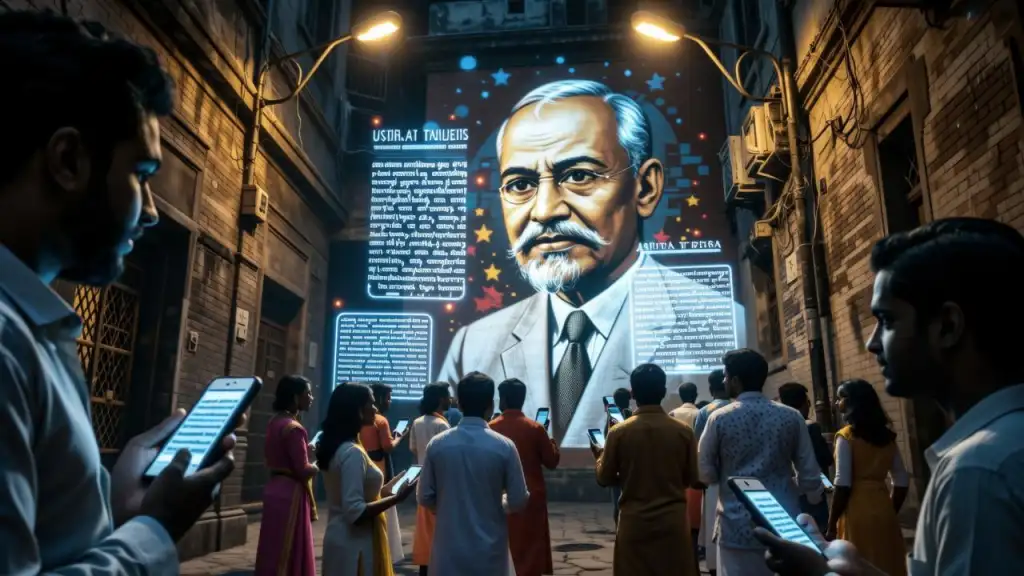
In 2025, Mumbai has become the unlikely epicenter of a global shift in how we understand rights education. Forget dusty pamphlets and distant UN speeches. Here, human rights are no longer abstract concepts debated in Geneva—they're embedded in alleyways, scannable with a tap, and experienced through stories that feel personal, urgent, and alive. At the core of this transformation? AR murals human rights projects led by grassroots collectives like StreetVoice Mumbai and supported by regional NGOs across South Asia.
Take the "Chain Breaker" mural in Govandi. Painted by Dalit artist Rekha Jadhav, it depicts a young woman tearing through iron shackles made of old ration cards and police files. When scanned via the free RightsLens app (available in Hindi, Marathi, Urdu, and English), the AR layer activates. The shackles dissolve into floating text: Article 17 of the Indian Constitution, banning untouchability. Then, audio plays—a real recording from 1946 of Dr. B.R. Ambedkar declaring, "I measure the progress of a community by the degree of progress which women have achieved." Kids gather around, phones raised like torches. One boy whispers, "So... my aunt wasn't born dirty? The system made people think she was?"
This is AR not as entertainment, but as emancipation tech. According to researchers from Tata Institute of Social Sciences (TISS) in their 2024 impact report on the Mumbai Rights Walls Project, after six months of exposure to AR murals human rights installations in three high-density informal settlements:
In 2023, only 12 AR-enabled public art pieces existed in all of India. By mid-2025, that number has exploded to over 217—with 89 concentrated in Mumbai alone. What changed? Three converging factors:
Interactive art bypasses institutional gatekeeping. According to neuroscientists at IIT Bombay, immersive learning via interactive art increases memory recall by up to 65% compared to passive reading.
Most human rights education is broken. In classrooms across India, Bangladesh, and Pakistan, students memorize articles of constitutions like scripture, disconnected from lived reality. Posters in NGO offices scream "Say No to Abuse!" in fonts no one reads. Workshops are held in air-conditioned rooms far from the streets where violations occur.
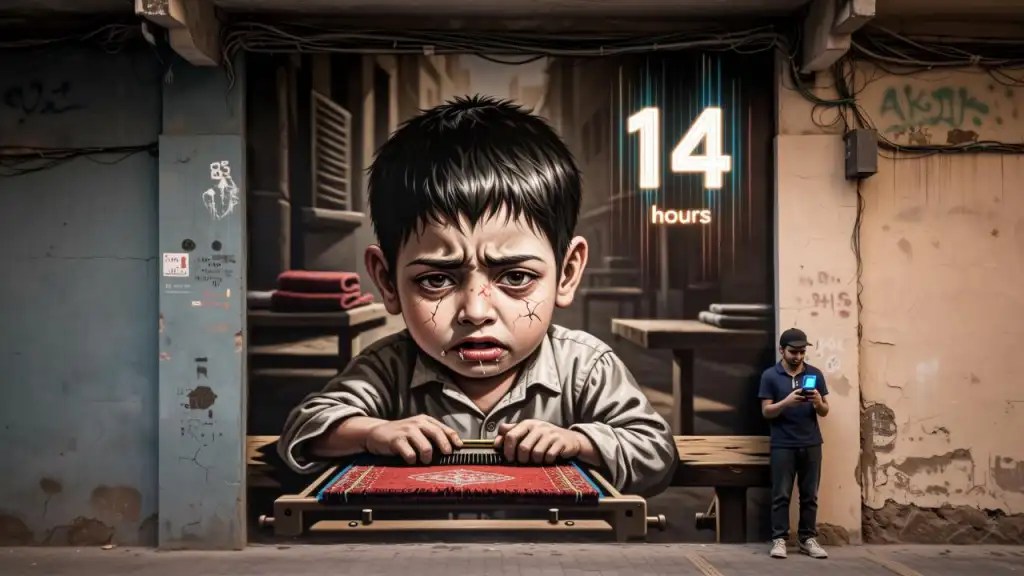
Imagine standing before a mural in Karachi's Lyari district. It shows a child worker bent over a carpet loom, eyes hollow. You scan it. Suddenly, your phone screen darkens. A timer appears: 14 hours. A voice says, "This is how long Hassan worked yesterday. He hasn't eaten." As minutes tick by, faint sounds emerge—coughing, a whip crack, a mother crying. After 14 minutes, the screen flashes: "Child labor violates Article 11 of the UDHR. And it happens every day."
This is the genius of AR-powered rights education: it builds embodied empathy. A 2025 pilot in Dhaka used AR murals to teach garment workers about fair wages. After interacting with a mural showing factory exploitation, 89% of participants reported filing wage complaints within two weeks—triple the rate of control groups (Source: Dhaka Labor Rights Initiative).
Murals include toll-free numbers for audio versions. Some partner with auto-rickshaws equipped with tablets. Others use projection mapping at night.
Teams consult local leaders and use symbolic rather than confrontational imagery, often framing messages around constitutional pride.
Absolutely. Solar-powered murals in coastal Bangladesh teach fishing communities about climate displacement rights.
The walls of Mumbai are no longer silent. They speak in Marathi, Hindi, Urdu, and Tamil. They tell stories of pain, yes—but also of resistance, resilience, and radical hope. And they do something few classrooms or governments have managed: they make human rights personal.
【Disclaimer】The content about is for reference only and does not constitute professional advice. Readers should make decisions based on their specific circumstances and consult qualified professionals when needed. The author and publisher assume no responsibility for any consequences arising from actions taken based on this content.
Rahul Kapoor
|
2025.11.13
