

 Feed back
 Privacy Policy
AquaStell
It's 6:17 a.m. on a humid April morning in Ludhiana, Punjab. Priya Kaur, a 38-year-old farmer who once struggled to sell her paddy for even ₹1,600 per quintal, logs into her village co-op app. On her screen, a live dashboard shows demand spikes in Dhaka and Karachi, updated warehouse stock levels in Amritsar, and a blinking alert: *"Solar dryer at cooperative hub 7 is free — book now?"* She taps "Yes." By noon, her rice will be dehydrated, graded, and pre-booked for export via a blockchain-tracked shipment routed through the newly launched Indo-Bangla Agri-Corridor.
This isn't science fiction. It's 2025 — and across India, Bangladesh, and Pakistan, agricultural cooperatives are no longer just about pooling seeds or sharing tractors. They've become intelligent, self-governing economic networks powered by shared ownership, mobile tech, and cross-border solidarity. What began as modest farmer collectives in the 1950s has evolved into something far more radical: decentralized, climate-smart, digitally native ecosystems where farmers aren't just producers — they're shareholders, data stewards, and supply chain architects.
But how did we get here? And can this model truly feed over 500 million people amid rising temperatures, shrinking landholdings, and collapsing rural incomes?
Let's dig in.
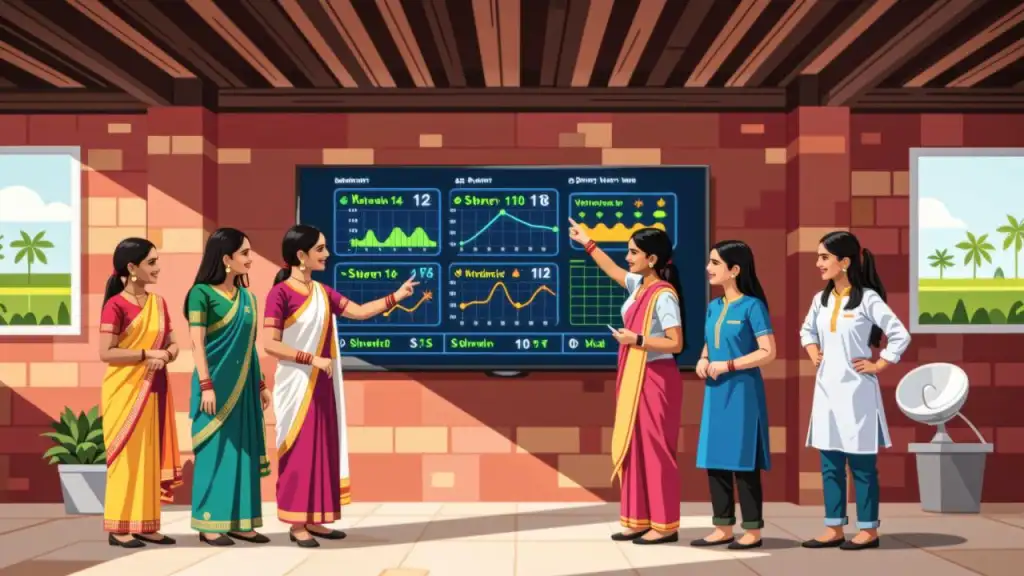
Imagine a bank that doesn't lend money — it grows food. A factory that doesn't pay wages — it distributes profits. An IT firm that doesn't code software — but runs an entire agrarian economy. That's what modern farmer collectives have become in South Asia today.
India alone hosts over 800,000 registered agricultural cooperatives, ranging from milk dairies like Amul to sugarcane syndicates in Maharashtra. But post-2020 reforms, especially after the repeal of controversial farm laws, there was a tectonic shift: farmers stopped asking for subsidies and started demanding sovereignty through shared ownership models.
Step into the village of Paliyad in Gujarat, and you'll see something extraordinary: a red-brick building with solar panels, satellite dishes, and a sign that reads *"Sahakar Nagar – Powered by Farmers, Run by Farmers."* Inside, five young women monitor a wall-sized screen displaying soil moisture levels across 12 villages. Outside, a convoy of electric mini-trucks loads packaged turmeric powder stamped with QR codes linking to every step of production.
This is no corporate agribusiness. It's a fully autonomous co-op run by the *Gujarat Organic Producers Alliance (GOPA)* — a network of 312 smallholders managing 1,800 hectares collectively through innovative shared ownership structures.
You've heard the stats: 86% of Indian farms are smaller than two hectares (Source: NSSO 2022). 70% of rural households live on less than $2.50 a day (World Bank 2023). Over 300,000 farmers have died by suicide since 1995 (National Crime Records Bureau).
But here's a number rarely mentioned: Only 11 cents of every dollar spent on food in Indian cities goes back to the farmer (NABARD 2024 Report).
If India's co-op movement is growing fast, Bangladesh and Pakistan are quietly catching up through innovative farmer collectives that could redefine regional food security.
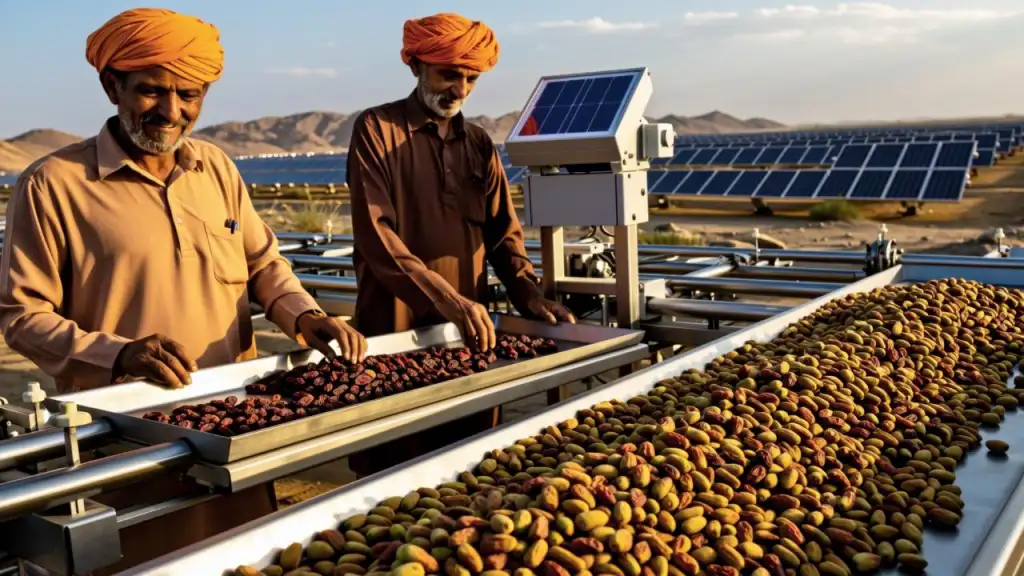
In Pakistan's Sindh province, the *Sindh Date Growers Co-op* achieved 40% cost reduction through:
Their export prices increased by 250% while maintaining full shared ownership among members (Sindh Agriculture Department 2024).
The *Mangrove Maitri* co-op along the India-Bangladesh border combines:
This model lifted 217 families above poverty since 2023 (UNDP Delta Resilience Report 2025).
Begin with 5-10 neighbors pooling resources for one shared asset. Register under your state's Cooperative Societies Act. Use apps like *Coopify* for digital governance (Ministry of Cooperation Guidelines 2024).
Yes — averaging 2.3x higher net income per hectare due to bulk purchasing power and direct market access (IFPRI Study 2024).
Absolutely — 72% of new co-op chairs in Jharkhand are women, using voice-based voting apps to overcome literacy barriers (NABARD Gender Report 2025).
[Disclaimer] This content about agricultural cooperatives and shared ownership models is for informational purposes only. Consult qualified professionals before making decisions. The author assumes no liability for actions taken based on this information.
Arjun Mehta
|
2025.11.13
