

 Feed back
 Privacy Policy
Imagine walking through Anarkali Bazaar in Lahore on a humid April morning in 2025. Rickshaws hum past, chai wallahs serve steaming cups in compostable leaf bowls, and shopkeepers hand over purchases wrapped not in plastic, but in biodegradable paper sealed with potato-starch glue. On the sidewalk, a solar-powered smart bin blinks green — full, but not overflowing. Within hours, its contents are sorted, scanned, and redirected: food scraps to urban farms, plastics to micro-recycling units, textiles to upcycling collectives.
This isn't a utopian fantasy. It's the quiet revolution unfolding across Pakistan's second-largest city — one fueled not by foreign aid or government mandates, but by a wave of grassroots startups redefining what a circular future looks like in South Asia.
Welcome to circular economy PK — a uniquely homegrown movement blending tradition, technology, and tenacity to build zero waste business models that work where others have failed.
You might think the circular economy began in Scandinavia or Silicon Valley. But by 2025, Lahore has quietly become one of the most dynamic testing grounds for sustainable innovation in the Global South. Why? Because necessity breeds invention — and Pakistan produces over 47 million tons of solid waste annually, with less than 30% formally managed (Source: Pakistan Environmental Protection Agency 2023). In this chaos lies opportunity.
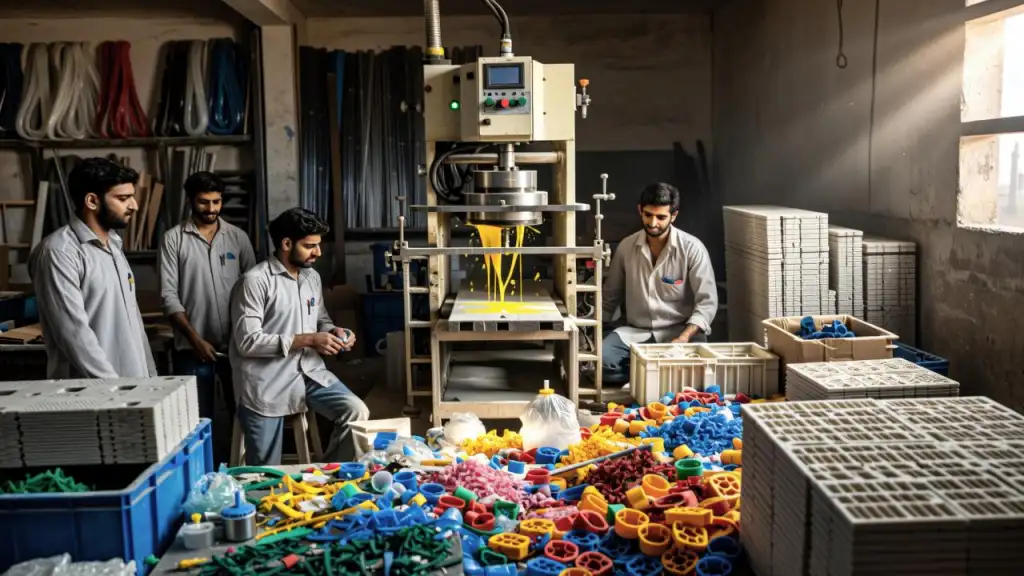
In 2023, engineering graduates Zara Khan and Imran Malik launched ReNew Lahore from a 200-square-foot garage in Gulberg. Their mission? To close the loop on single-use plastics — specifically polypropylene (PP), commonly used in yogurt cups and takeaway containers.
By 2025, ReNew had diverted over 85 tons of plastic from landfills, created 37 local jobs, and supplied durable paving tiles to three public parks in Lahore. More importantly, they proved something crucial: a zero waste business could be both environmentally sound and financially viable — even without venture capital.
Let's talk numbers — because they tell a story policymakers can't ignore:
Because circular economy PK isn't copying European blueprints. It's adapting them. These startups aren't waiting for perfect sorting facilities or carbon credits. They're building modular, low-cost systems that integrate seamlessly with existing realities — including the vast informal sector.
A 2024 report by the Sustainable Futures Institute ranked Lahore among the top five emerging circular hubs in Asia — ahead of cities with far greater resources. The reason? Context-aware innovation.
If you're wondering whether zero waste business can survive beyond pilot projects, look no further than Compost Connect, another Lahore-born startup making waves in 2025.
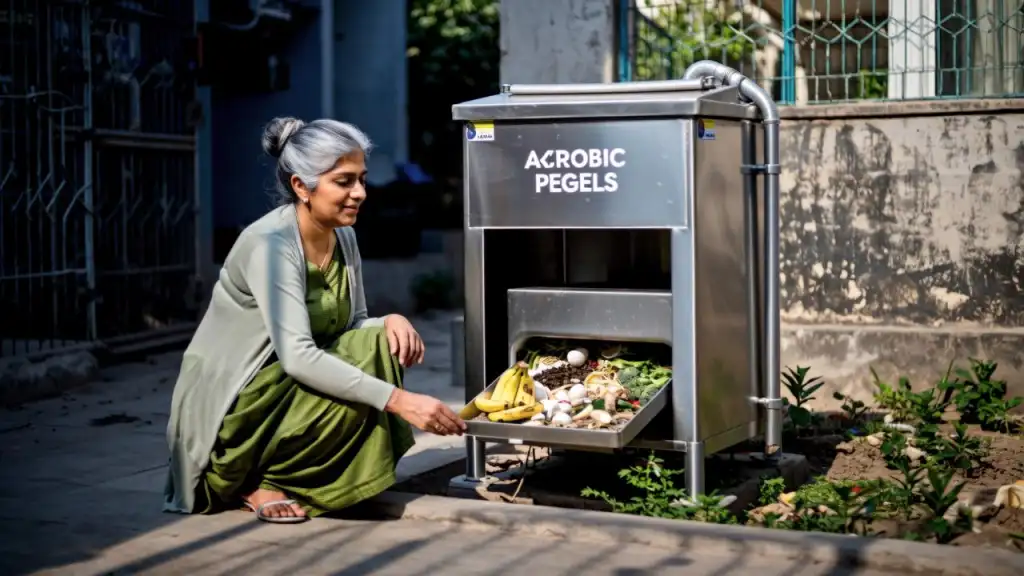
Founded by environmental scientist Dr. Farah Nadeem, Compost Connect tackles organic waste — which makes up nearly 60% of Lahore's garbage. Her team installs compact, odor-free aerobic digesters in apartment complexes, schools, and markets.
Want to launch your own zero waste business in 2025? Here's a real-world playbook based on lessons from Lahore's pioneers:
Here's a provocative truth: South Asia has always practiced a form of circularity — just not called that.
What Lahore's startups are doing differently is formalizing without replacing. They're adding traceability, quality control, and market access — while preserving the agility and resilience of informal networks.
Consider UpCycle Arts, a collective that partners with transgender artists and marginalized women to transform discarded textiles into high-end fashion accessories.
It's built for density, diversity, and informality. While Europe focuses on high-tech sorting and policy mandates, Pakistan's version thrives on human networks, low-cost tech, and behavioral nudges.
Yes — but profitability looks different. Margins may be thin, but volume and social impact amplify value.
Start small. Identify one waste stream in your community. Build a prototype — even if it's handmade.
In 2025, Lahore stands as a beacon of what's possible when sustainability meets street smarts. The circular dream isn't reserved for rich nations with pristine recycling plants.
The movement isn't called circular economy PK because it happens to be in Pakistan. It's called that because it's of Pakistan — rooted in its culture, shaped by its constraints, and powered by its people.
DISCLAIMER: The information provided in this article about Circular Economy Startups in Lahore Inspired by Sustainable Futures is for general informational purposes only. All information is provided in good faith, however, we make no representation or warranty of any kind regarding the accuracy or suitability of the content. Readers should consult with professional advisors before making any decisions based on this content.
Aisha Khan
|
2025.11.13
